Burkina Faso
A Nation of Courage and Dignity
Burkina Faso, officially the Transitional State of Burkina Faso, is a landlocked country in West Africa. It covers an area of approximately 274,200 km² and is bordered by Mali, Niger, Benin, Togo, Ghana, and Côte d'Ivoire.
National information
Key facts and figures about Burkina Faso — its governance, geography, culture, and people.
-
Capital Ouagadougou
-
Population Approximately 22.5 million (2024 est.)
-
Official Languages French (official), Mooré, Dioula, Fulfulde, and 60+ national languages
-
Calling Code +226
-
Climate Tropical with two seasons: rainy (June–October) and dry (November–May)
-
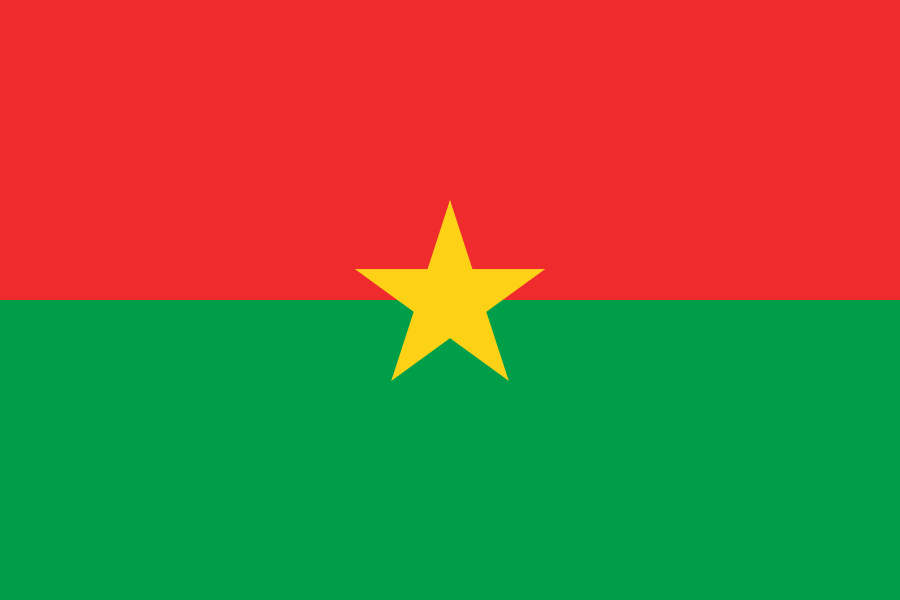
National Flag Two horizontal bands — red (top) and green (bottom) — with a gold five-pointed star at the center
-
Motto Unity – Progress – Justice
-
National Anthem The Ditanyè (“One Single Night”)
-
Time Zone GMT / UTC+0 (no daylight saving time)
-
Currency West African CFA Franc (XOF)
-
Head of State Captain Ibrahim Traoré, President of the Transition
-
Prime Minister Rimtalba Jean Emmanuel Ouédraogo
Leadership
-
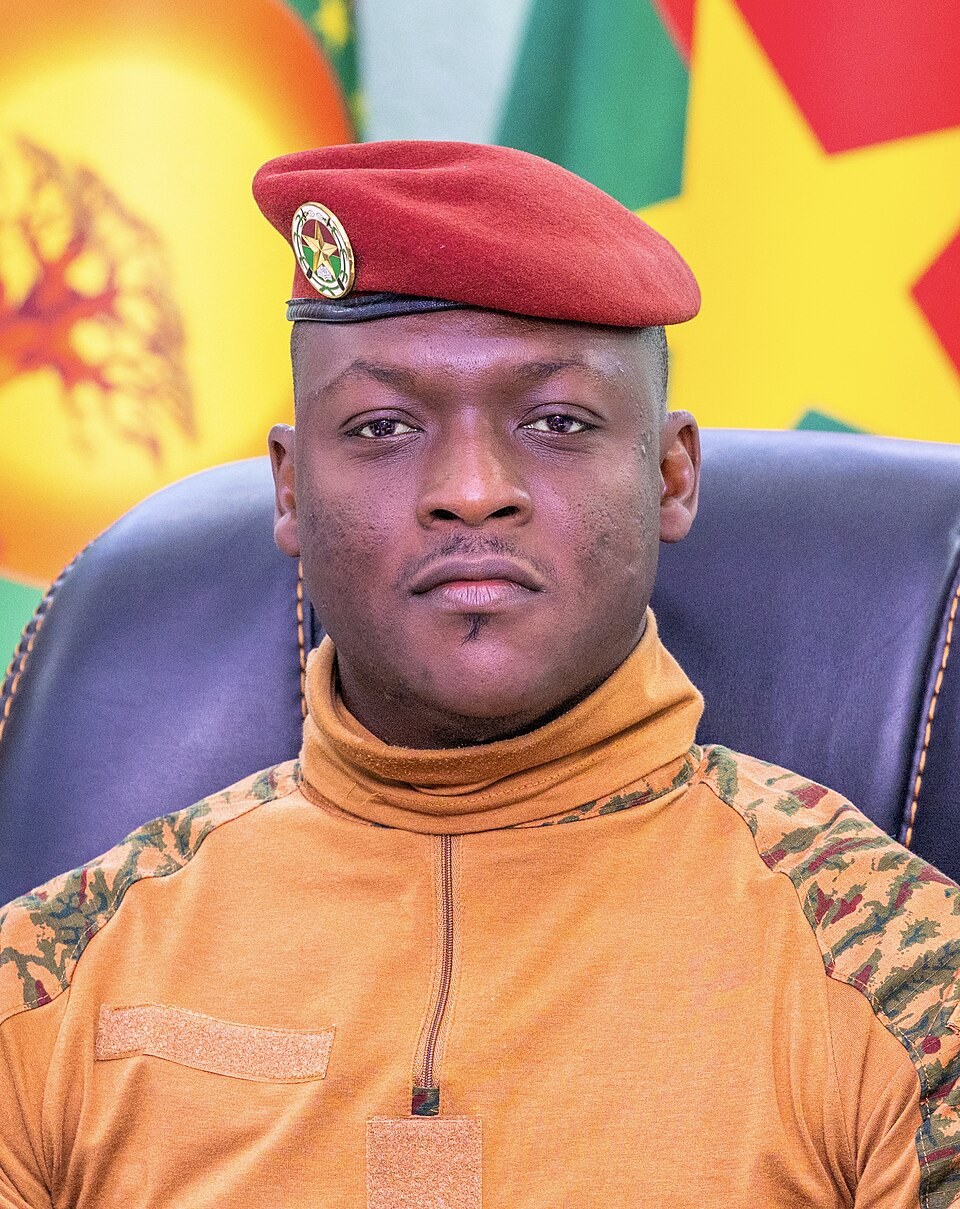
Captain Ibrahim Traoré
Head of State, President of the Transition
-
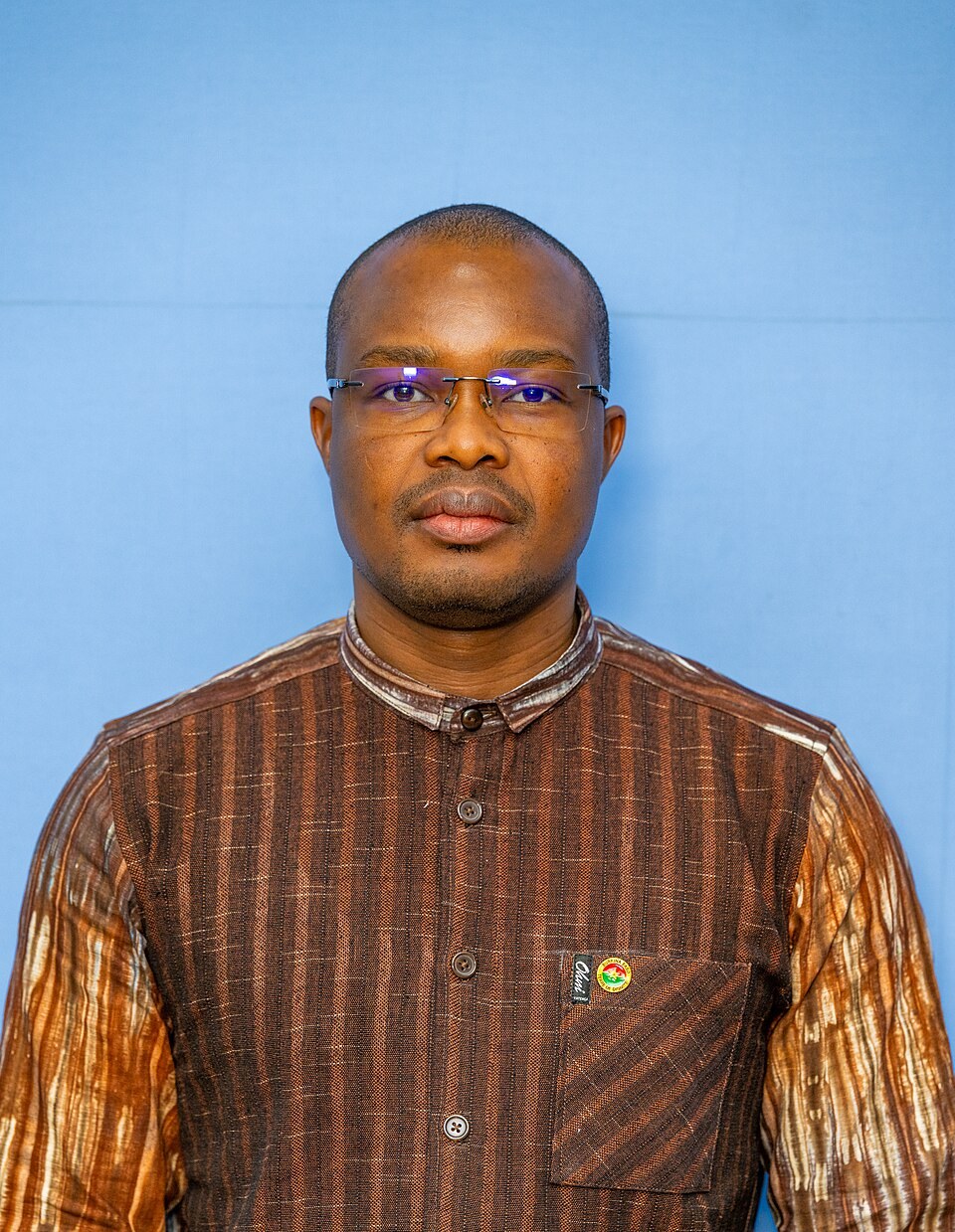
Rimtalba Jean Emmanuel Ouédraogo
Prime Minister
Geography and Territorial Organisation
The name Burkina Faso means “land of upright people”. Located in the heart of West Africa, the country has no access to the sea: it is bordered by Mali to the north and west, Niger to the north-east, Benin to the south-east, Togo and Ghana to the south, and Côte d'Ivoire to the south-west.
The terrain is very flat: the highest point, Mount Ténakourou in the west of the country, reaches 747 m.
Under the administrative division resulting from the 2001 reform, the territory had 13 regions, 45 provinces and 350 departments, together with some 350 fully-fledged communes led by elected mayors and about 8,000 villages. Each department corresponds to a commune of the same name, which groups and administers the localities within it. A territorial reform adopted in 2025 raised the number of regions to 17.
The Coat of Arms
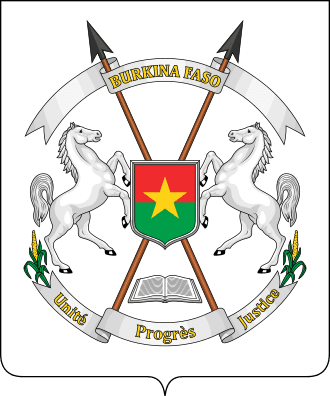
The coat of arms of Burkina Faso is set by Law No. 20/97/II/AN of 1 August 1997. It consists of:
- a shield bearing at the top, on a silver banner, the name of the country: “BURKINA FASO”;
- at its centre, an escutcheon with two horizontal bands bearing the national emblem, over two crossed spears;
- two rearing silver stallions supporting the escutcheon on either side;
- at the base, an open book;
- below, two crossed millet stalks joined at their base by a scroll bearing the national motto “Unité – Progrès – Justice” (Unity – Progress – Justice).
Symbolism
- The two stallions: the nobility of the Burkinabè people; their stance expresses action, and their arrangement the need for unity, which is the strength of the people.
- The escutcheon: the protection of the nation and love of the homeland; a shield against hazards and a bulwark against all aggression, it ensures the security of the State.
- The spears: the determination of the sons of Burkina Faso to defend their homeland; their crossed position reflects the vigilance and bravery of the people.
- The open book: the quest for knowledge and education, drivers of progress and development.
- The millet ears: the aspiration to food self-sufficiency and abundance.
Flag, Motto and Anthem
The flag of Burkina Faso consists of two horizontal bands of equal size, red above and green below, with a five-pointed golden-yellow star at the centre.
- Red symbolises the blood shed yesterday, today and tomorrow by patriots and, by extension, all the sacrifices of the Burkinabè people.
- Green represents the country's plant and agricultural wealth and, by extension, the abundance that will bring happiness to the people.
- The yellow star symbolises the vision and perfection that must guide the country in building its future.
The national motto is “Unité – Progrès – Justice” (Unity – Progress – Justice). The national anthem is the Ditanyè, also known as “Une seule nuit” (One Single Night).
Culture
Festivals
- FESPACO (Panafrican Film and Television Festival of Ouagadougou): the largest African film festival, held every two years in Ouagadougou, in February of odd-numbered years.
- SIAO (Ouagadougou International Arts and Crafts Fair): the largest fair promoting African crafts, held every two years, mainly in even-numbered years (late October – early November).
- SNC (National Culture Week): held every two years in Bobo-Dioulasso, over one week.
Museums
- Ouagadougou and surroundings: National Museum, Music Museum, Armed Forces Museum, Water Museum, Manéga Museum.
- Bobo-Dioulasso: Sogossira Sanou Museum, Museum of Music of Yesterday and Today, Senufo Cultural Centre.
- Gaoua: Museum of the Civilisations of the South-West.
- Kaya: Kaya Museum.
Languages
Burkina Faso has more than 60 ethnic groups and more than 60 languages. The most widely spoken include Mooré, Dioula, Fulfulde, Gulmancema, Bobo, Dagara, Lobiri, San, Marka (Soninke), Bwamu, Senufo, Toussian, Kassena, Lyélé and Bissa.
Faso Dan Fani
Faso Dan Fani, “woven cloth of the homeland” in Dioula, is a traditional hand-woven fabric, highly prized in Burkina Faso and abroad.
Burkina Faso – India Bilateral Relations
Burkina Faso and India enjoy warm and friendly bilateral relations, rooted in shared values of South-South cooperation. India has been a steadfast partner in Burkina Faso's development through technical assistance, capacity building, and lines of credit. The two nations continue to strengthen ties across trade, education, health, and cultural exchange.